
How poor drainage moves your foundation and what fixes it
By Timothy Moose, Managing Editor · Updated 2026-11-03
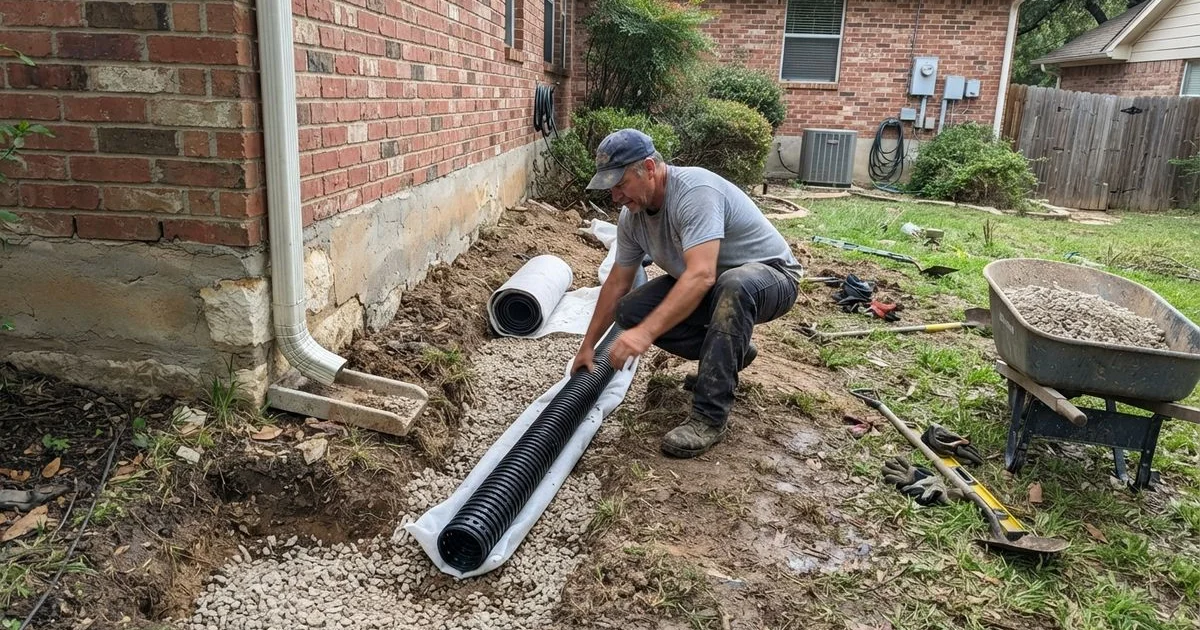
Foundations rarely fail from one big event. Water is the slow driver. When rain pools beside a wall or a downspout empties at the footing, the soil there stays wetter than soil elsewhere, and clay reacts by swelling. The house ends up with one side moving differently from the other. You can browse local companies in the foundation drainage and waterproofing category.
How water becomes movement
In the Austin area, expansive clay swells when wet and shrinks when dry. If one side stays wet because of bad grading or a clogged gutter, that side lifts while the dry side settles. The result is the differential movement behind many cracks. The glossary covers expansive clay and hydrostatic pressure in short form.
Fixes, from simplest to most involved
| Fix | Use when | Effort |
|---|---|---|
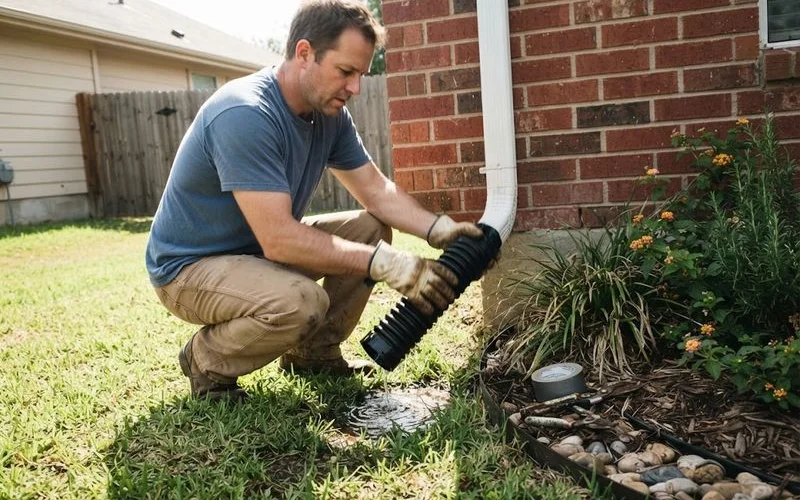
| Gutter cleaning and downspout extensions | Water drops at the wall | Low |
| Regrading soil away from the house | Ground slopes toward the wall | Low to medium |
| Surface drains or swales | Runoff collects in the yard | Medium |
| French drain | Groundwater or persistent wet soil | Medium to high |
| Sump pump | Water collects below grade | Higher |
| Waterproofing membrane | Seepage through walls | Higher |
Our French drain estimator models cost by length and discharge difficulty, and actual bids vary with soil and access.
Sequence with structural repair
If you already have cracks, do not assume drainage alone will close them. Get an inspection to see whether the structure needs piers as well. Reviewers who mention drainage often describe companies fixing the crack and the water issue together, which is a good model. Where the water source is a leaking pipe under the slab, that needs its own repair first.
Questions for a drainage contractor
- Where will the water go once it leaves the drain?
- How was the problem diagnosed?
- Is the work permitted if required?
- What does the warranty cover?
Reading your own yard
Walk the perimeter after a heavy rain. Where does the water go? If it collects within a few feet of the wall, you have a drainage issue. If it runs fast along the foundation, grading and downspouts are the likely fix. Take photos of the wet spots so a contractor can see them.
Landscaping choices that help or hurt
Flower beds that trap water against the wall, mulch piled above the slab line and sprinkler heads that spray the foundation all keep soil wet. Moving them is cheap. Large trees close to the house pull moisture from the soil in dry months, which can cause shrinkage, so distance matters.
When it is not drainage
If the soil is well graded and the gutters work but cracks still grow, a plumbing leak or deeper soil movement may be the cause. A plumbing test under the slab can rule a leak in or out. Do not spend on drains if the real culprit is a pipe.
Costs and expectations
Simple fixes cost little. Drains and waterproofing grow expensive with length and difficulty. Our estimator gives a rough budget, and written bids confirm it. Ask what result you should expect and how long the drain should last.
Keep it simple
Fix the cheap things first: gutters, downspouts and grade. Then bring in a professional if water still collects. See how we score for our ranking approach and the home page for all categories. This is general information, not engineering advice.
Frequently asked questions
- Can drainage alone cause foundation damage?
- It can contribute. Water pooling beside the house changes soil moisture, which makes clay swell and shrink unevenly.
- What is the cheapest first step?
- Clean gutters, extend downspouts and check that soil slopes away from the walls.
- Do I need a French drain?
- Only where groundwater or runoff is a real issue. An inspector or engineer can say.
- Should drainage be fixed before piers?
- Usually alongside or before. Piers support the slab, but wet soil can keep causing trouble.
Related on this site
- Browse foundation drainage & waterproofing providers
- Best foundation drainage & waterproofing in Austin Area →
- Slab foundation repair methods compared: pressed, steel and drilled piers
- Do you need a structural engineer report before foundation repair?
- Pier and beam foundation repair: what to expect from start to finish
- Mudjacking vs foam leveling: which method fits your slab or driveway
- All guides →