
Pier and beam foundation repair: what to expect from start to finish
By Timothy Moose, Managing Editor · Updated 2026-10-23
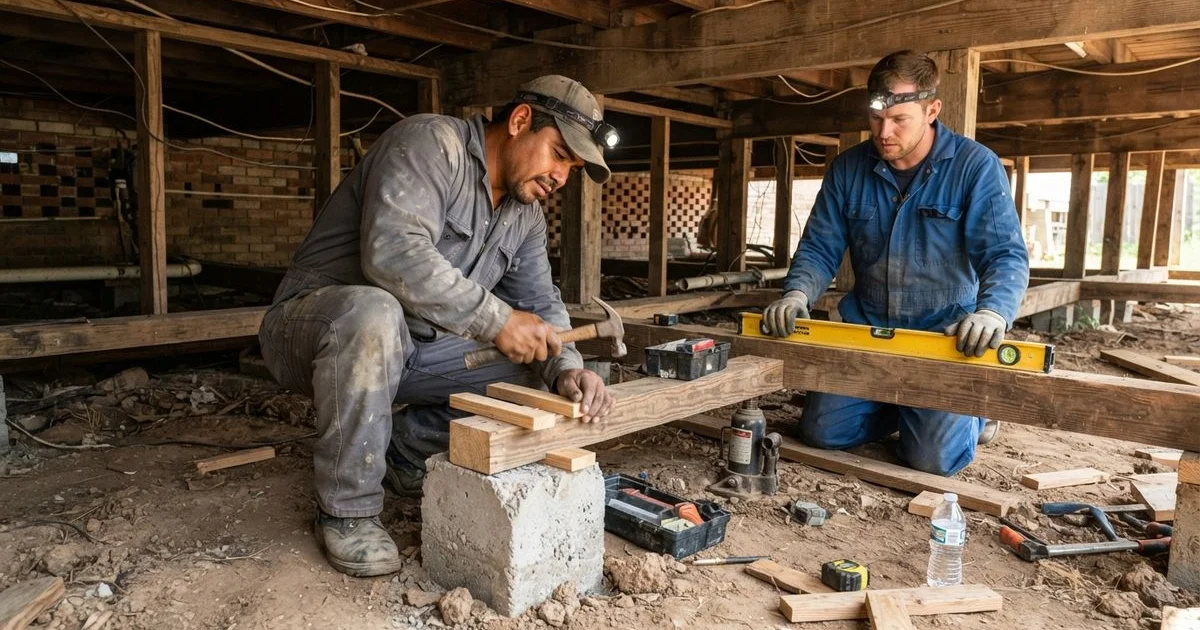
If your Austin house sits up on a crawl space, the repair process looks different from a slab job. Many older neighborhoods have pier and beam homes, and local searches for pier and beam repair are among the most common. This guide walks through what usually happens. You can compare local companies in the pier and beam repair category.
Step by step
- Inspection. Someone crawls under the house and checks beams, joists, piers, shims and moisture. Expect photos and measurements.
- Diagnosis. Common findings are sunken or leaning piers, failed shims, rotted wood and wet soil.
- Scope. The plan lists which piers to replace, which beams to support and whether to sister joists.
- Leveling. Crews jack the beams slowly and set new piers or shims. This is the part that moves your floors.
- Repairs to wood. Damaged joists may be sistered or replaced.
- Moisture control. Drainage, vapor barriers or encapsulation may be added.
- Final check. Measurements and cleanup.
| Stage | Typical question to ask |
|---|---|
| Inspection | Will you provide photos of what you found? |
| Scope | How many piers and shims are included? |
| Leveling | What level of improvement do you expect? |
| Moisture | Is vapor control part of this quote? |
| Close-out | What is the warranty? |
What affects timing and price
Access is the main variable. A tight crawl space slows everything. Our pier and beam estimator treats pier count and house size as the main drivers, so a larger footprint costs more. For overall ranges see our cost guide.
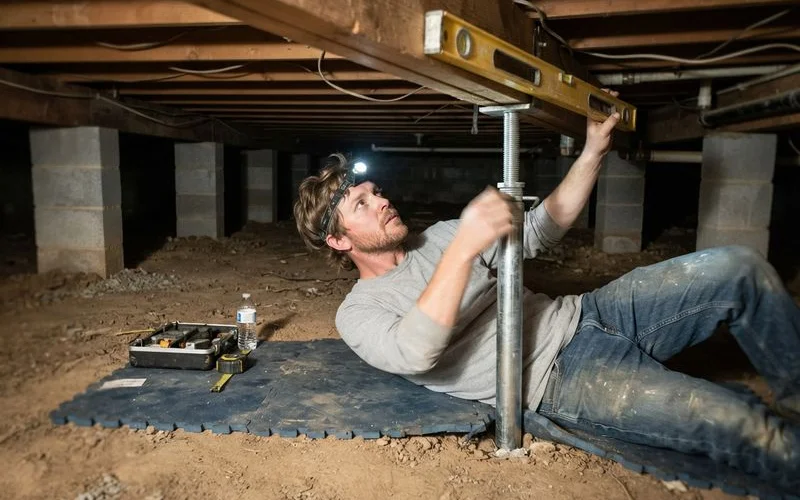
What to watch for
Interior cracks can appear as the structure moves back into position. A good company warns you before it starts. Reviewers praise clear communication and clean job sites, and the complaints we see are about slow follow-up and warranty claims that went unanswered.
Living in the house during the work
Most owners stay in the home. Expect crews crawling under the house, some noise, and access needs at the crawl space door. Move stored items out of the way and secure pets. If the work includes plumbing near the crawl space, ask about water shutoffs.
Wood problems get found late
Once crews open up the crawl space, they may discover rotted joists or termite damage that was not visible before. Ask how change orders work, and ask that any added work be priced in writing before it happens. A good company calls you and shows photos.
Shimming and the glossary
Some repairs only adjust shims between piers and beams rather than replacing piers. The glossary covers beam and pier shimming and sistering in a few lines. For many older homes, a mix of shimming, new piers and sistered joists is typical, and the quote should itemize each one.
After the repair
Expect small cosmetic touch-ups: sticking doors may need planing and drywall cracks may need patching. Floors often improve but may not be perfect. Check the crawl space once or twice a year for moisture, and keep records of the work for resale.
Before you hire
Ask for the scope in writing, ask who performs the work, and confirm the warranty covers the specific repair. Learn how listings are ranked in how we score and browse the full directory from the home page. This is general information, not engineering advice.
Frequently asked questions
- How is pier and beam repair different from slab repair?
- The crawl space gives access from below, so crews often adjust or replace piers and shims rather than pushing piers around a slab.
- Will my floors be level afterward?
- Leveling aims to improve slope, but older wood framing may not return fully flat. Ask for the target in writing.
- How long does a typical job take?
- Many jobs run from a day to a few days depending on scope. Ask for a schedule.
- Do I need to fix moisture too?
- Often yes. Wet crawl spaces damage wood and shift piers.
Related on this site
- Browse pier and beam repair providers
- Best pier and beam repair in Austin Area →
- Slab foundation repair methods compared: pressed, steel and drilled piers
- Do you need a structural engineer report before foundation repair?
- Mudjacking vs foam leveling: which method fits your slab or driveway
- How poor drainage moves your foundation and what fixes it
- All guides →